The Solitude of the Northern Fjords: Sailing Norway's Outer Reaches
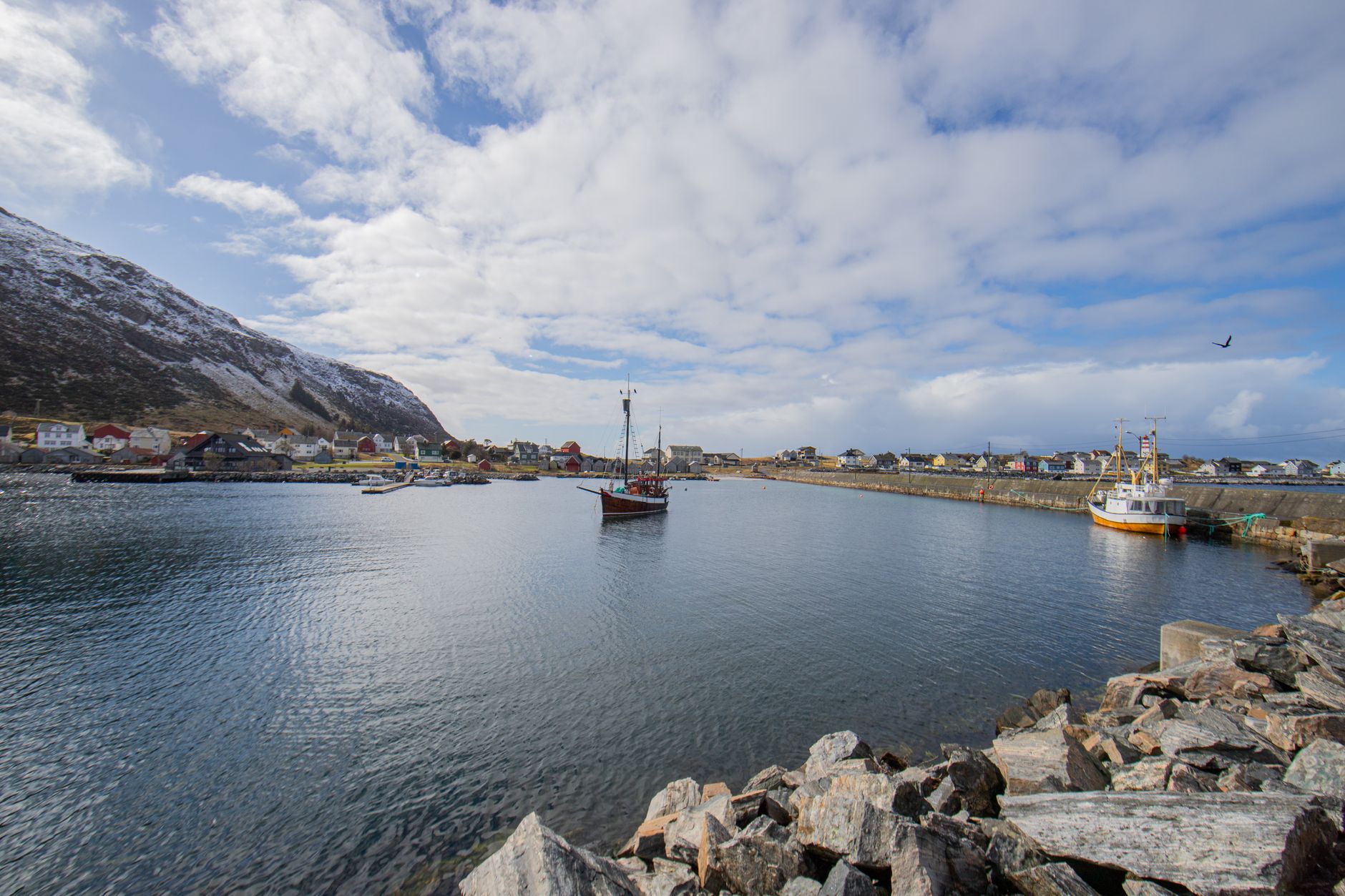
Granite ramparts rising through morning maritime mist along the Helgeland coastline.
Table of Contents
1. The Outer Passage and Arctic Tides
To understand the Norwegian coastline, one must step away from the cruise vessels that crowd the inner channels of Geiranger. Along the western outermost archipelago of Helgeland, hundreds of low-lying islands shield the mainland from the fury of the Norwegian Sea. Here, the maritime landscape is defined not by towering enclosed walls, but by an astonishing openness where water and sky blur into subtle gradations of pewter and slate.
We boarded a wooden ketch in Bodø, casting off lines as a thin drizzle gave way to sudden patches of luminous pale gold. The rhythm of navigation in these waters is dictated strictly by the tidal race through narrow sounds. There is no rush; attempting to contest the ebb tide is an exercise in futility. Instead, the voyager learns to drop anchor in sheltered kelp bays and wait.
2. Keepers of the Rock: Days at Kya Lighthouse
Isolated on an exposed skerry miles from any sheltered anchorage stands the red cast-iron column of Kya. Built in the late nineteenth century to warn fishing fleets off treacherous submerged reefs, it was manned continuously until automation arrived decades ago. Today, visiting with the permission of the maritime preservation trust reveals a way of life carved out of solitude and brass polish.
"In the winter gales, the spray reaches the lantern deck sixty feet above the rocks. You do not conquer this coast; you learn to be very small upon it."
The interior quarters remain remarkably intact: teak chart tables, coal stoves converted to simple paraffin heaters, and logbooks recording water temperatures and bird migrations dating back over a century. The solitude here is not barren; it is deeply restorative, forcing the mind to shed the incessant static of constant digital connection.
3. Wooden Architecture and Cod Heritage
Further south in the fishing hamlet of Rørvik, life centers on timber structures perched over the water on pine pilings. For centuries, the drying of skrei (Arctic cod) on outdoor wooden racks (hjell) provided Europe with preserved protein. The clean ocean breezes keep the fish from rotting while the freezing air cures the flesh with minimal salt.
Walking through the drying grounds in early summer carries the briny, elemental scent of the sea. It is a reminder that travel is as much olfactory as it is visual. The architecture itself—painted with traditional Falun red derived from copper slag and cod liver oil—has weathered generations of fierce North Atlantic storms.
4. Lessons from Still Horizons
In our modern vocabulary, silence is often treated as an emptiness, something to be instantly occupied by podcasts or notifications. Yet along the Norwegian fjords, silence has weight, texture, and physical presence. It is the cry of a white-tailed eagle echoing off wet gneiss, the slap of sea wrack against the hull, the sigh of the northern wind passing through sea thrift.
As we returned our ketch to the harbor, the lesson of the fjords remained clear: we travel not to accumulate photographs of famous viewpoints, but to restore our capacity for prolonged, reverent attention.